Perimeter Security Built for Decades
Pipe Fence Construction in Amarillo for property boundary definition, livestock containment, and durable perimeter barriers
Wind pressure across open rural land in the Texas Panhandle creates lateral loading that collapses lightweight fencing within a few seasons, leaving property lines unmarked and security compromised. Castaneda Construction builds pipe fencing in Amarillo using welded steel construction that resists deflection under sustained wind events and impact from debris or livestock. You notice rigid fence lines that remain plumb and square years after installation, with joints that show no separation or rust failure at connection points.
Pipe fence construction begins with setting corner posts in concrete footings deep enough to resist frost heave and wind uplift, then tensioning horizontal rails between posts using consistent spacing that prevents sagging. Welded joints at each intersection create a continuous structural frame rather than relying on bolted connections that loosen over time. The process requires accurate post alignment so that rails run level across uneven terrain without creating gaps at the bottom rail or excessive height variation along the fence line.
Request a consultation to evaluate property boundaries and discuss custom layouts for pipe fence installation.
Why Welded Pipe Fencing Works for Rural Properties
Pipe fencing provides superior strength-to-weight ratio compared to wooden posts and rails, which split along grain lines under impact and rot at ground contact points within a decade. Steel pipe resists both bending and torsional stress, maintaining fence geometry even when livestock lean against rails or vehicles brush the perimeter during field work. The welded construction eliminates mechanical fasteners that corrode and require periodic retightening, reducing long-term maintenance demands for property owners managing large fence runs.
After installation completes, you notice clean sight lines along property boundaries, gates that operate smoothly without binding, and fence sections that require no adjustment or repair during the first decade of service. The galvanized or painted finish protects against rust initiation, while the welded joints remain intact even in areas where wooden fences would experience connection failure from seasonal ground movement. Fence height and rail spacing are customized based on whether the primary function involves livestock containment, privacy screening, or simple boundary marking.
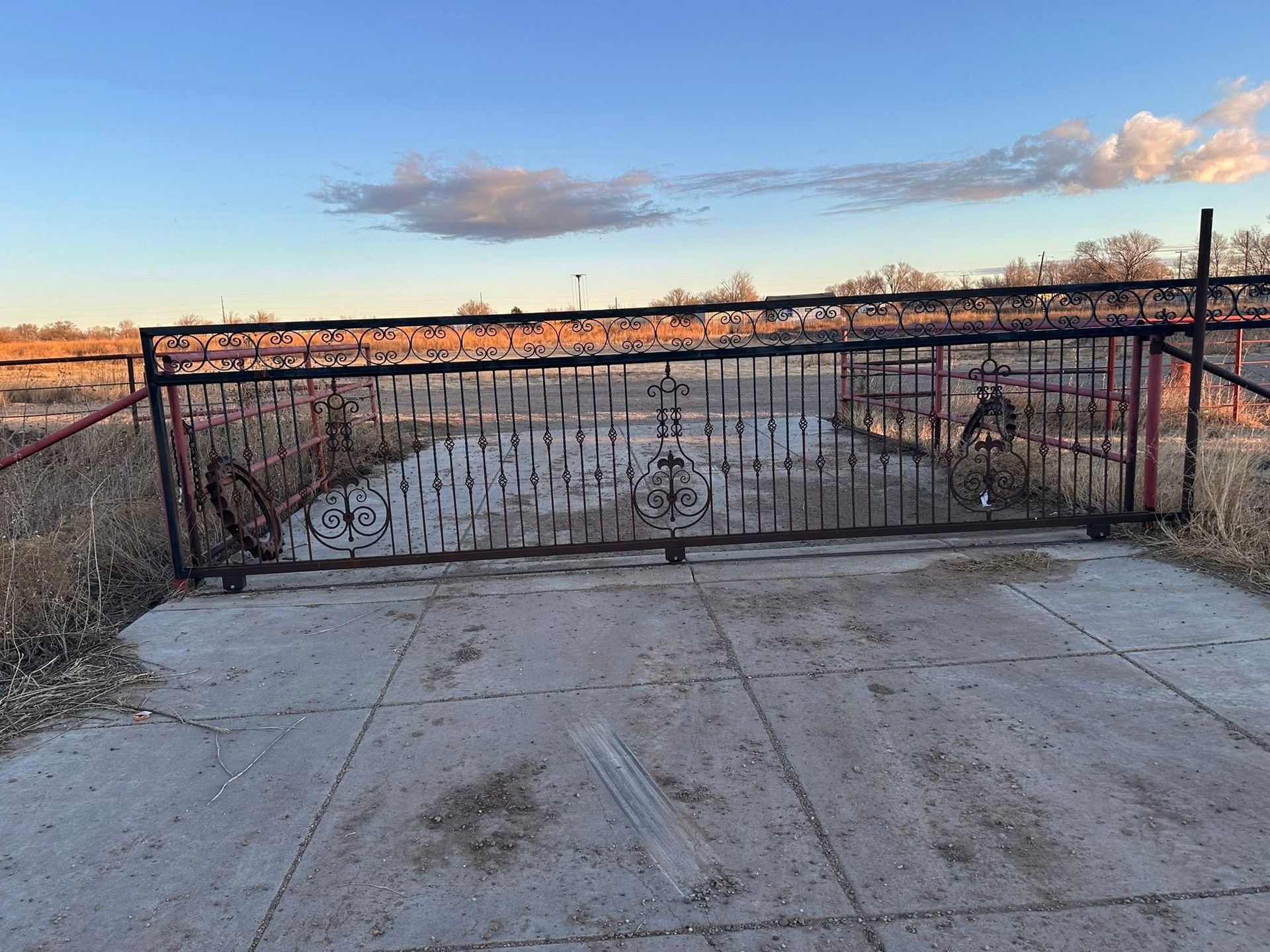
Projects include both new perimeter construction and replacement of failing wooden or wire fencing that no longer provides adequate security or property definition. Custom layouts accommodate gate openings for vehicle access, incorporate existing corner posts that remain structurally sound, and adjust rail configuration to match terrain changes without creating weak points. The work is completed with attention to clean welds, uniform post height, and organized site management that minimizes disruption to existing landscaping or field use.
Common Questions About This Service
Property owners across Amarillo and the surrounding region often ask about material selection, installation timelines, and how pipe fencing compares to other perimeter options.
What pipe diameter is appropriate for residential fencing?
Most residential and rural perimeter applications use two-inch or two-and-a-half-inch pipe for corner posts and one-and-a-half-inch pipe for line posts and horizontal rails, providing adequate strength without excessive material cost for standard fence heights.
How deep are fence posts set?
Corner posts and gate posts are typically set three feet deep in concrete footings to resist pulling forces, while line posts are set thirty inches deep with concrete or compacted backfill depending on soil conditions and fence loading requirements.
When is pipe fencing preferred over wood or wire?
Pipe fencing makes sense for properties requiring long service life with minimal maintenance, areas with high wind exposure, locations where livestock create impact loading, and boundaries where visual presence matters for security or property definition.
How does welding experience affect fence quality?
Welding capability allows fabrication of custom gates, attachment of hardware without drilling holes that initiate rust, and creation of rigid joints that distribute stress evenly rather than concentrating forces at bolted connections that work loose over time.
What factors influence fence layout design?
Terrain changes, existing access points, corner locations, gate placement for equipment passage, and whether the fence must contain animals or simply mark boundaries all affect rail spacing, post frequency, and overall construction approach.
Castaneda Construction combines welding capability with construction experience to deliver pipe fencing that remains functional and visually clean across residential and rural properties. Arrange a property visit to discuss boundary requirements and receive a detailed estimate based on fence length and terrain conditions.